

ArtCentral: Why Art?
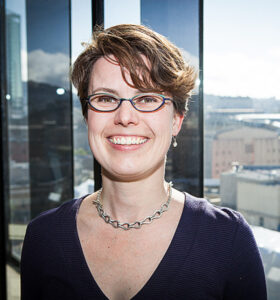
By Elizabeth Freer
Matthews Opera House, ArtCentral Manager
Have you noticed a few of the collaborative art projects appearing in Spearfish? Perhaps you’ve been a part of, or seen, ArtCentral projects such as Linking Fences and the painted crosswalks? Maybe you’ve turned the crank on the new Termesphere in downtown Spearfish. Many have asked why we put so much effort into ArtCentral projects, and each time I talk about why art is so important.
Have you noticed a few of the collaborative art projects appearing in Spearfish? Perhaps you’ve been a part of, or seen, ArtCentral projects such as Linking Fences and the painted crosswalks? Maybe you’ve turned the crank on the new Termesphere in downtown Spearfish. Many have asked why we put so much effort into ArtCentral projects, and each time I talk about why art is so important.
The most straightforward answer is that the presence of arts and culture are critical to the economic health of our community. The recent Arts and Economic Prosperity 5 study (http://www.americansforthearts.org/) found that non-profit arts and culture sector in the Black Hills Region is a $114.3 million-dollar industry, supports over 3,500 full-time equivalent jobs and generates $10 million in local and state government revenue. Arts and culture generate revenue not only for artists but arts and culture also increase spending on restaurants, hotels, retail and local businesses. The study demonstrates that communities that invest in arts and culture are investing in their economic health. But, perhaps the economic health of a community is only part of the story?
Much of the value of art is in the process of making it. For me, this is what really makes art essential. Art-making is valuable at any age or stage in life. In adults, the art-making process exercises mental muscles and creative thinking that keeps our brains healthy and active. In kids, making art teaches skills that enhance classroom learning, builds empathy, and helps to develop skills that are in-demand in the job market.
Making art teaches resiliency, flexibility, and resourcefulness. Performing in theater teaches public speaking, presentation skills, team-work, and confidence. Building sets for shows teach construction techniques and increase familiarity with household tools. Theater can teach technical skills such as lighting techniques, music recording and mixing, and computer programming. Knitting and music teach about patterns, codes, and stick-to-itiveness. Various forms of art encourage risk-taking, curiosity, innovation, collaboration, and build problem-solving skills. These are all skills that we need in our future community leaders, employees, and local business owners.
Art gives a voice to individuals, tells a story, and enhances our understanding of other individuals and cultures around us. Art builds community and connections within the community. Art leads to civic engagement and a sense of belonging. And, the presence of the arts makes our community a more interesting place to be! The arts are essential – for their role in the economic health of our community, for the skills they teach, and the connections they forge – and not just entertainment. The arts are a tool for building a stronger and healthier community.
ArtCentral is a community collaboration, funded by a 2016 Bush Foundation Community Innovation Grant, to centralize the arts as an integrated asset for inclusivity, economic development, and outreach in Spearfish. As this is a community-based project, we welcome feedback and suggestions, as well as volunteers. Please contact us by email at ArtCentral@MatthewsOpera.com if you are interested in volunteering or have suggestions.
Lead by Elizabeth Freer, ArtCentral manager at The Matthews, the project brings together a committee of advocates, artists, and residents working together over two years to create a new model for arts planning and outreach, focusing on the themes of belonging, inclusion, equity, rural connectedness, cultivating creativity, imagining space, and the arts as a community development catalyst.
“I am excited for this opportunity to work in Spearfish with The Matthews on this innovative and important project to advance the arts in our community,” stated Freer. “I encourage local residents who are interested in participating in this process to apply to be a part of the committee.”